When Balance Sheets Break, Opportunity Emerges
January 21, 2026
Capitalizing on Corporate Credit Dislocation
Years of near-zero interest rates fundamentally reshaped corporate balance sheets. Cheap capital encouraged companies to borrow aggressively, often at historically high leverage levels. As rates normalized, debt servicing costs rose sharply, creating pressure across sectors—including on otherwise operationally sound businesses. At the same time, the widespread adoption of covenant-lite loan structures reduced lender protections, increasing the likelihood of negotiated restructurings rather than straightforward refinancings.
The result is a prolonged period of balance sheet stress that is structural, not cyclical. Rather than a short-lived downturn, today’s environment reflects the unwind of an extended credit cycle—one that is still in its early stages.
The Maturity Wall: A Powerful Multi-Year Tailwind
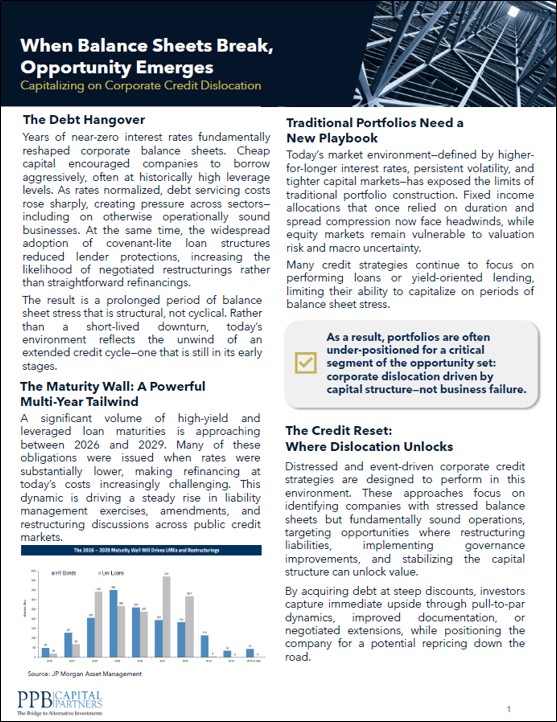
A significant volume of high-yield and leveraged loan maturities is approaching between 2026 and 2029. Many of these obligations were issued when rates were substantially lower, making refinancing at today’s costs increasingly challenging. This dynamic is driving a steady rise in liability management exercises, amendments, and restructuring discussions across public credit markets.
Here are a few discovery questions for you to explore:
- What role does distressed credit play in your portfolios today?
- Where are you most exposed to refinancing and maturity risk?
- How are you positioning portfolios for credit dislocation?